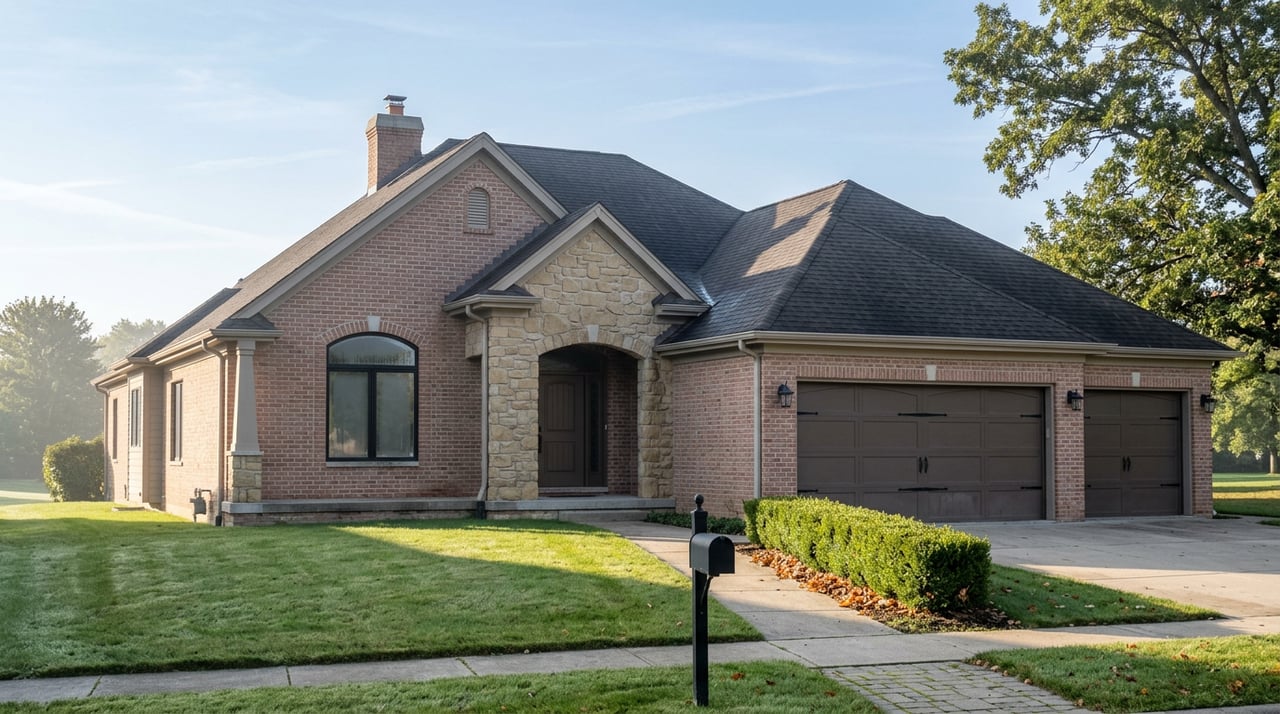
In Summerfield Farms, the Builder Is Gone. The HOA Fee Still Isn't Settled.
September 10, 2026
September 10, 2026
In 2017, a group of homeowners in Summerfield Farms filed a petition asking their homeowners association to dissolve itself. Their complaint was specific. They had been told their monthly HOA fee covered maintenance of the neighborhood's retention ponds and the upkeep of the entrance signage. It turned out the pond-adjacent homeowners were on the hook for their own mowing, the signage wasn't being kept up either way, and the fee had just been raised to cover attorney and administrative costs nobody had voted on.
That dispute is nearly a decade old now, and this post isn't a claim that it's still unresolved today. What it points to is still true: Summerfield Farms is a sold-out subdivision built in phases by more than one builder, and once a builder leaves, the people responsible for shared costs are the neighbors themselves. If you're comparing this Lancaster neighborhood against others on price alone, you're missing the part of the transaction that actually causes friction after closing.
Summerfield Farms wasn't built by a single company on a single timeline the way a modern 40-lot Ryan Homes release often is. Listings across the neighborhood show homes built by Ryan Homes, by Marrano, and by CMK Builders, spanning construction dates from the early 2010s onward. Ryan Homes' own marketing now lists the community as fully sold out, meaning every home currently for sale there is a resale, not new construction.
That layering matters because a subdivision built in phases by different builders rarely has one uniform HOA structure. Common areas added in an earlier phase, like a retention pond built to handle stormwater for a specific cluster of lots, often become the maintenance responsibility of only the residents in that phase. Entrance signage or landscaping added later can carry its own budget line. When residents assume one fee covers all of it, and later discover the obligations are split unevenly, you get exactly the kind of dispute that surfaced in 2017.
While a subdivision is still selling new construction, the builder has a direct incentive to keep the HOA functional and the shared spaces presentable. Unsold lots are easier to move when the ponds are mowed and the signage looks sharp. Once the last lot closes, that incentive disappears. The HOA board is now made up of homeowners, often volunteers, managing a shared budget with no developer backstop and no professional property manager unless the community specifically hired one.
This is the structural shift a buyer researching "Summerfield Farms homes for sale" won't see on a listing sheet. The house looks the same whether it closed in 2013 or 2024. The governance behind it does not.
Because the neighborhood spans multiple builders and years, two homes on the same street can carry different construction standards, different original price points, and different amenity obligations tied to their specific phase.
| Builder | General era | What it tends to mean for a resale buyer today |
|---|---|---|
| Ryan Homes | Later phase, now sold out | Standardized floor plans, community fully built out, no new-construction competition inside the neighborhood |
| Marrano | Mixed phases | Brick-front ranches and similar product common in Western New York starter-to-move-up inventory |
| CMK Builders | Custom or semi-custom lots | More one-off features, less standardization between homes |
None of this shows up in a neighborhood median. It shows up when you ask for the seller's disclosure, the HOA's governing documents, and a look at which phase the specific lot sits in.
Lancaster's housing market gives useful context, but it describes the town, not this subdivision specifically, and it's worth looking at how that town-wide number is actually built. In the most recently reported month, January 2026, only 8 homes sold in Lancaster, up from 7 the year before. That's the entire sample behind a monthly median. The reported figure for that month was $283,000, up 21.1% from January 2025, with homes taking a median of 23 days to sell, slower than the 15-day pace from a year earlier. The median price per square foot for the trailing period was $209, up 29.3% year over year, a steeper climb than the headline price itself.
Two things follow from that. First, a monthly median built on 8 sales moves around a lot from one buyer's negotiating leverage or one estate sale, which is exactly why a single town-wide number can't tell you much about a specific 90-some-home subdivision inside it. Second, the gap between price and price-per-square-foot growth suggests buyers were paying a growing premium for whatever size and condition of home was actually available, rather than every home simply costing more across the board. In a built-out neighborhood like Summerfield Farms, where no new supply can be added, that kind of pressure has nowhere to go but into the price of the existing housing stock. You're not just competing against other Lancaster buyers. You're competing for a fixed number of homes in a subdivision that will never get bigger.
None of this means avoid the neighborhood. It means ask different questions than the ones the listing photos answer.
A seller who can answer these clearly, with documents rather than assurances, is a strong signal. A seller who can't is a reason to slow down, not walk away.
Does "sold out" mean I can't buy in Summerfield Farms? No. It means every current opportunity is a resale rather than new construction through the original builder. You can still buy there, but you're buying into an established, fully-formed community rather than a still-developing one.
Is the 2017 HOA dispute still an active issue? That specific petition is from 2017, and this post makes no claim about its current status. What it demonstrates is a structural pattern worth checking for directly: ask for the HOA's current financials and meeting minutes rather than relying on secondhand assurances about what the fee covers.
Do all phases of the neighborhood share the same HOA and the same fee? Not necessarily. Shared infrastructure like retention ponds is often tied to the phase that built it, which means obligations and costs can differ from one section of the neighborhood to another even though the address says the same subdivision.
Buying in a built-out neighborhood like Summerfield Farms rewards the kind of homework most buyers skip because the house itself looks finished and the neighborhood looks settled. The finished look is exactly why the governance questions matter more, not less. If you're weighing this neighborhood against other Lancaster options, The Macey Team can walk through the HOA documents, the phase history, and the current market conditions with you before you write an offer. Let's Connect.
Stay up to date on the latest real estate trends.
Brennan combines industry experience, financial insight, and a client-focused approach to help you navigate every step of your real estate journey.