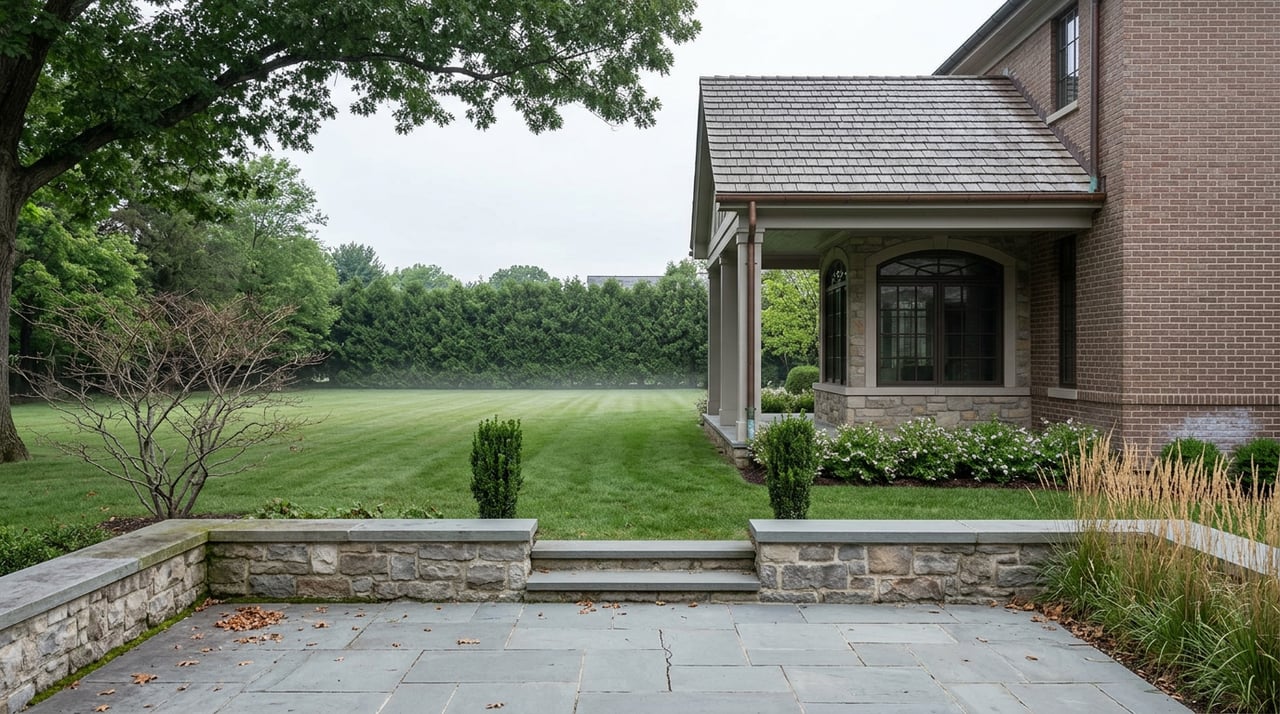
The Orchard Park Median Doesn't Know Which Decade You're Buying Into
September 3, 2026
September 3, 2026
Turn off Jewett Holmwood Road in Orchard Park and you have two choices within a few hundred yards of each other. Take the turn onto Orchard Hill Drive and you're standing in Eagle Heights, a subdivision of roughly 2,500-square-foot homes built mostly in the 1970s. Keep driving and take the turn onto Birdsong Parkway instead, and you're in a subdivision of 3,500- to 4,000-square-foot homes built starting in the mid-2000s, one that is still adding new lots as of last fall. Same road. Same town. Same zip code on the listing sheet. Almost nothing else the same.
That gap matters more than it should for anyone who has spent time staring at a single median price for Orchard Park and assumed it describes one kind of home. It doesn't. It describes an average across at least three distinct eras of construction stacked along the same corridor, and which one you end up touring on a Saturday afternoon determines your square footage, your mechanical systems, your lot size, and in one case, whether the subdivision itself is still being argued over at town board meetings.
Before either subdivision existed, Jewett Holmwood Road was lined with farmhouses on multi-acre lots, and some of those parcels are still there. Public property records show homes fronting the road directly that were built as early as 1870 and 1900, sitting on lots between two and nearly six acres, predating both Eagle Heights and Birdsong by decades. They're not part of either subdivision. They're what the road looked like before either one was platted, and they still show up when a buyer searches listings on Jewett Holmwood Road itself rather than by subdivision name.
Then come the two subdivisions proper.
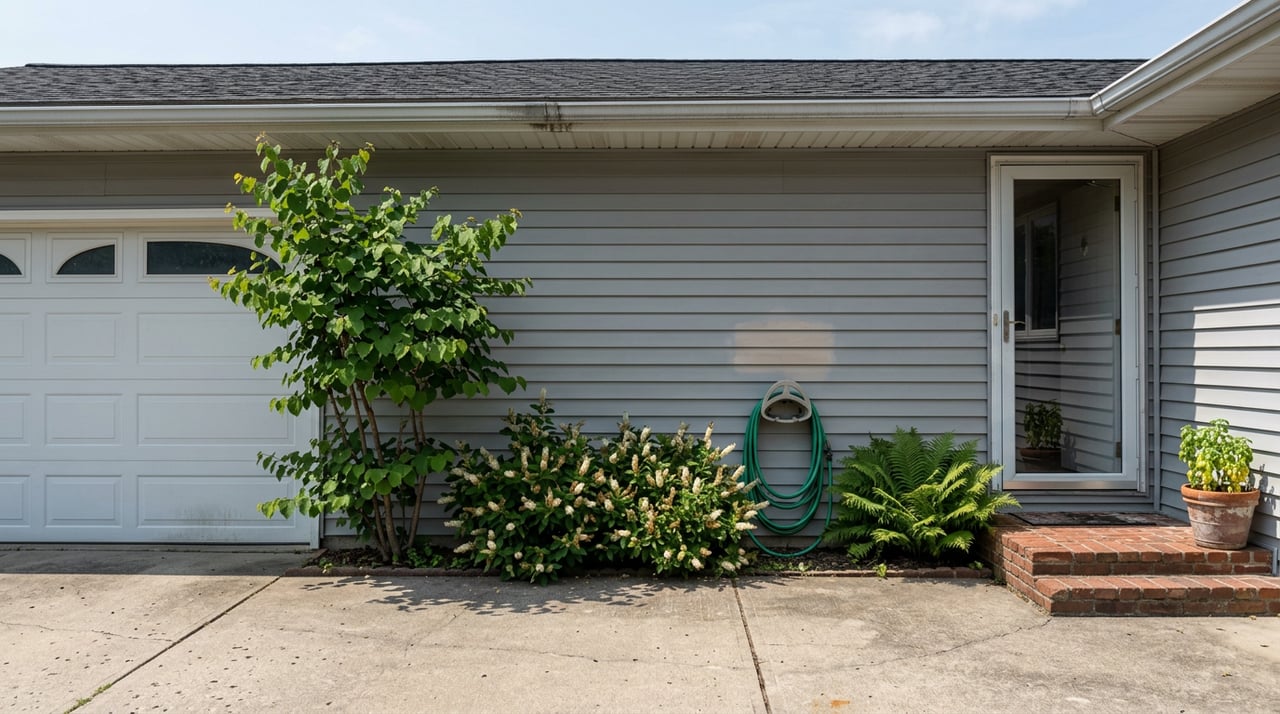
Eagle Heights is entered from Jewett Holmwood Road onto Orchard Hill Drive. It's a subdivision of detached single-family homes averaging around 2,500 square feet, built primarily during the 1970s. Recent listings in the subdivision have ranged from roughly $440,000 for a four-bedroom, two-and-a-half-bath home to $575,000 for a four-bedroom, three-bath home. It is finished inventory. Nobody is building new homes in Eagle Heights. Whatever is on the market is a resale, and whatever systems are in that resale, from the roof to the electrical panel to the driveway, are working through their second or third decade of life.
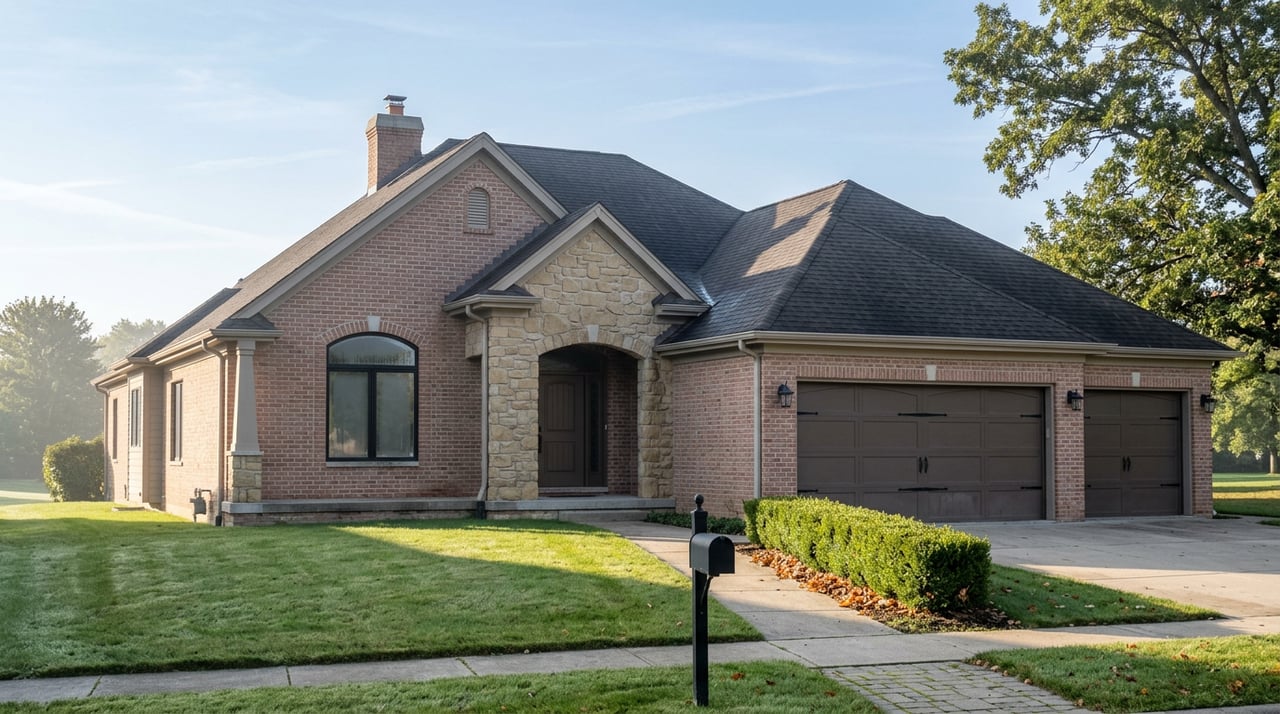
Birdsong is entered from the same road onto Birdsong Parkway. It's a subdivision of larger detached homes, 3,500 to 4,000 square feet, built starting around 2005 through 2009. Recent sale prices there have run from roughly $500,000 to just over $1 million, with reported values clustering closer to $650,000. Unlike Eagle Heights, Birdsong isn't finished. It's still being built.
As of November 2025, the New York State Department of Environmental Conservation was reviewing a completed application from Birdsong Lakes LLC to construct a 61-lot residential subdivision as Birdsong's Phase 2, at the intersection of Transit Road and Jewett Holmwood Road. The proposal would affect roughly 2.62 acres of the buffer area around a mapped freshwater wetland, and the mitigation plan calls for buffer plantings along with monuments installed specifically to prevent future lawn expansion into the regulated wetland zone.
That single filing tells a buyer something the median price never will. If you're touring a home in Birdsong right now, you may be touring a subdivision that finished building fifteen years ago, or you may be touring one that's still working through state environmental review for its next 61 lots. Those are different products even if the listing photos look similar.
Birdsong also isn't internally settled on what it wants to be. In May 2024, residents and neighbors filled a town board meeting to oppose a proposed rezoning change that would have brought patio homes to Birdsong Subdivision Part 5. The board held off on a decision after the hearing. That's a real, recent example of a fight over density and housing type happening inside a subdivision that outsiders would just call "Birdsong" on a listing sheet, as if it were one uniform product.
If you've been watching Orchard Park listing data, you've probably seen at least two different median figures depending on which report you're reading, and they don't line up neatly. Town-wide listing data for August 2026 put the median around $544,000, at roughly $227 per square foot. A separate report pulling from the 14127 zip code specifically showed median listing prices closer to $801,000 as of February 2026, up nearly 15 percent from the year before.
Those numbers aren't a contradiction so much as a symptom. A town-wide median blends Eagle Heights resales, Birdsong sales, farmhouse parcels on multi-acre lots, and everything else in Orchard Park's housing stock into one number. A zip-level snapshot pulled at a different moment, with a different mix of what happened to be listed that week, will land somewhere else entirely. Neither number tells you what a 2,500-square-foot 1970s ranch off Orchard Hill Drive costs versus a 3,800-square-foot 2007 colonial off Birdsong Parkway. You have to go looking at the subdivision level to get that answer, which is exactly why the median is a starting point for a search and not a budget.
Even the property-record averages you'll find for Jewett Holmwood Road as a whole undersell the picture. Public tax-assessment data for the road puts the average assessed value well under half of what a Birdsong resale is currently commanding, because that average is weighted down by decades-old farmhouse parcels being taxed on their assessed value rather than their current market value. Assessed value and market value are not the same thing, and a household comparing a tax record to a listing price is comparing two different measurements of the same street.
The comparison isn't only about price and size. It's about what got built alongside each subdivision.
| Eagle Heights | Birdsong | |
|---|---|---|
| Entry point | Orchard Hill Drive off Jewett Holmwood Road | Birdsong Parkway off Jewett Holmwood Road |
| Typical build era | Primarily 1970s | Circa 2005 to 2009, with new phases still in review |
| Typical size | Around 2,500 square feet | 3,500 to 4,000-plus square feet |
| Recent price range | Roughly $440,000 to $575,000 | Roughly $500,000 to just over $1 million |
| Built-in recreation | No dedicated subdivision trail system | Adjacent to Birdsong Park, with a paved walking path, six handicap-accessible wooden bridges, and nearly a mile of crushed stone nature trail |
That last row isn't a coincidence. Subdivisions built more recently, especially ones that have had to satisfy wetland buffer and stormwater mitigation requirements the way Birdsong's later phases have, tend to come with more built-in natural infrastructure than subdivisions platted fifty years ago under a different regulatory landscape. Eagle Heights predates most of that framework. Birdsong was built inside it, and its Phase 2 filing shows that framework is still shaping what gets added next.
If your agent is showing you homes in both subdivisions on the same day, it's worth asking a few questions before you walk in the door.
Does the Orchard Park median price tell me what a home in Eagle Heights or Birdsong will cost? Not directly. The median blends every subdivision and build era in town, including farmhouse parcels on multi-acre lots that predate either subdivision. Use it as a general signal for the town, then ask for subdivision-specific comps before you set a budget.
Is Birdsong finished, or is it still being built? It's still being built. As of the most recent state filing in November 2025, Birdsong Lakes LLC had a completed application under review for a 61-lot Phase 2 expansion, and the subdivision has had internal disputes over housing type as recently as 2024.
Buying in Orchard Park means deciding which decade, which phase, and which set of trade-offs fit your household, not just which zip code shows up on the search filter. If you're weighing a resale off Orchard Hill Drive against new construction near Birdsong Parkway, or trying to figure out what a specific subdivision comp actually supports as an offer, The Macey Team can walk the comps with you street by street rather than town-wide. Let's connect.
Stay up to date on the latest real estate trends.
Brennan combines industry experience, financial insight, and a client-focused approach to help you navigate every step of your real estate journey.