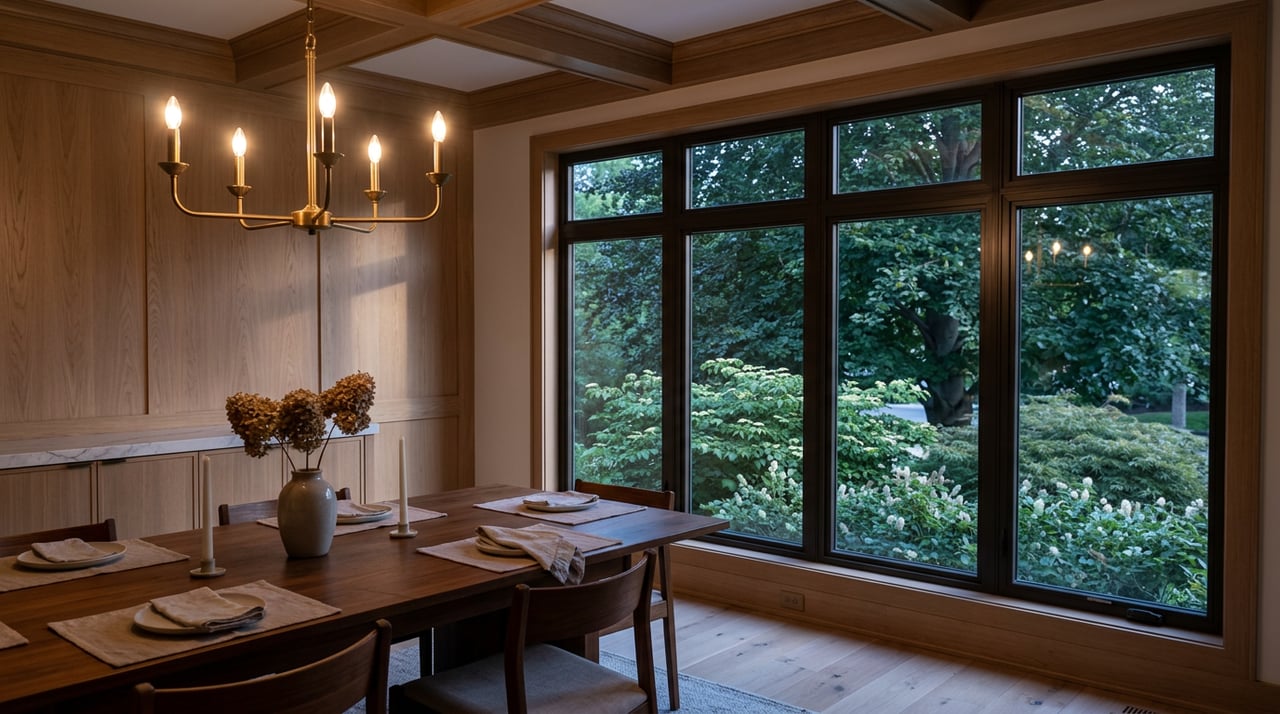
Why Woodstream Farms Has No Fences, No Sidewalks, and No Reliable Median Price
August 20, 2026
August 20, 2026
"Above ground fencing is prohibited by deed restriction." That's the entire sentence, no exceptions clause attached to it in the text itself. If you want a fence around a pool, you submit plans to a volunteer committee and wait for written approval. If you want one around your yard so the dog can run loose, you don't get to ask.
This is the kind of detail that never makes it onto a listing sheet. A buyer scrolling through East Amherst subdivisions sees square footage, lot size, a school district, and a price. What they don't see is that Woodstream Farms operates less like a typical homeowners association and more like a small legal system, one written in the early 1960s and still enforced today, and that this system is the actual reason the neighborhood looks the way it does. It is also the reason its median price is nearly impossible to pin down from a portal search. Those two facts are connected, and understanding the connection matters more than any single number a listing site hands you.
Homeowners associations typically charge for what they maintain: a clubhouse, a pool, common landscaping, snow removal on private roads. Woodstream Farms has none of that. According to sales data compiled by a local brokerage, the average HOA fee across the subdivision runs around $8 a month. That's not a typo and it's not a low-service HOA cutting corners. There's simply nothing communal to fund, because the association isn't managing shared property. It's managing behavior.
The Woodstream Farms Association's own published covenants lay out what's actually being enforced:
The association gives itself, and residents, a one-year window to catch and enforce a violation after it occurs. Read the neighborhood's own description of its purpose and the intent is stated plainly:
"We are unique among residential developments in Amherst in that our neighborhood emphasizes the landscape rather than the homes."
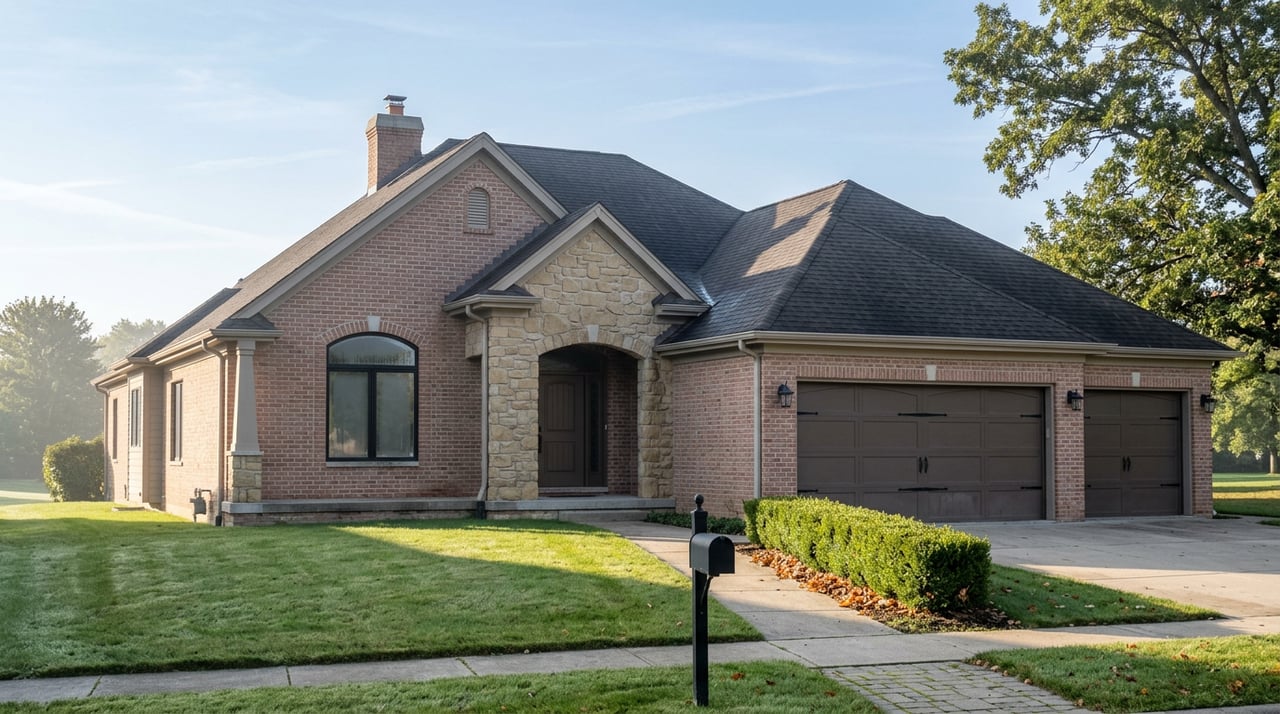
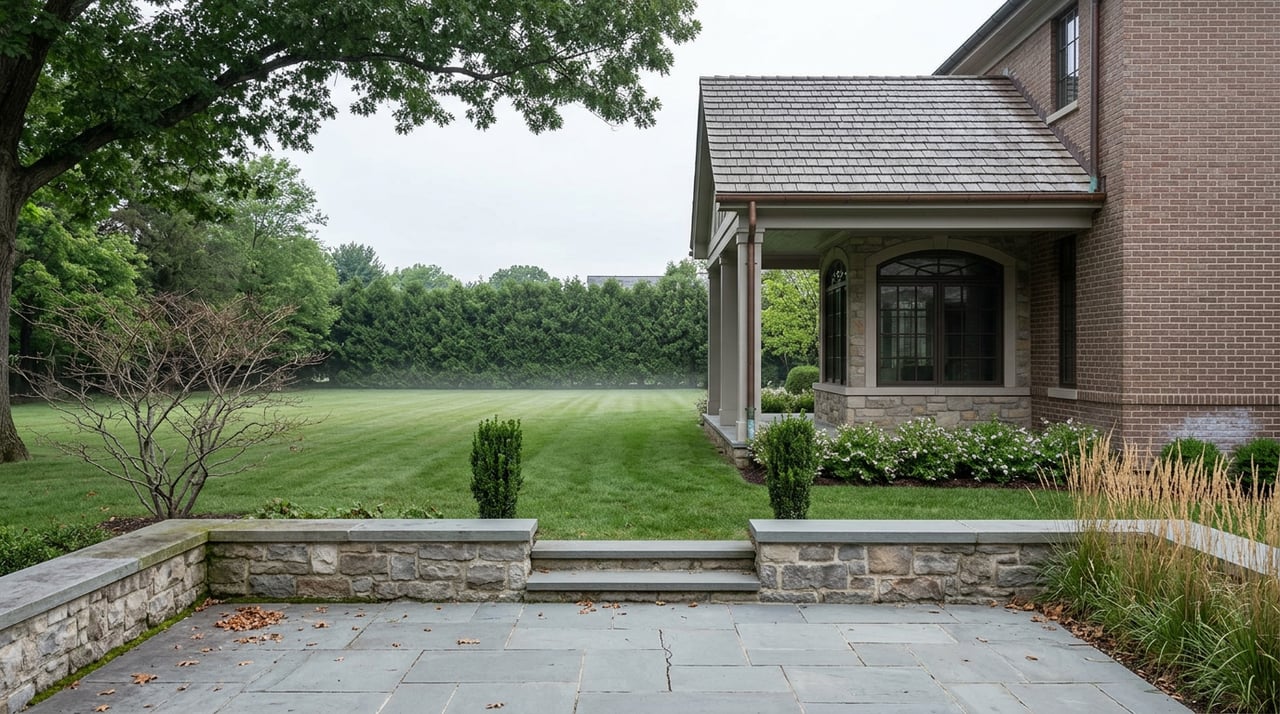
That's not marketing language written for buyers. It's the association explaining, to its own residents, what the $8 a month is actually protecting. The homes are secondary. The tree canopy, the open sightlines, the absence of chain-link and privacy fencing carving up backyards, that's the asset being preserved, and it's preserved by covenant enforcement rather than by a landscaping budget.
Woodstream Farms was carved out of farmland by the developer Pearce & Pearce in the early 1960s, on land that had previously held a hunting lodge owned by a prominent Buffalo family. The interior streets, Knollwood Lane, Rollingwood Street, Ardsley Lane, Farmington Road, and Briarhill Road, sit between Deer Run to the north and Klein Road to the south. When the subdivision went in, the developers made a deliberate choice to preserve as many mature trees as possible rather than clear-cut for maximum lot count, and they skipped sidewalks entirely.
More than sixty years later, that choice is still visible and still legally protected. No lot can be split to add density, no matter how the market pressures Amherst elsewhere. No fence can carve a yard into a private enclosure. Any resident who wants to add a shed or extend their home has to clear it with a committee first. The neighborhood looks consistent today not because zoning happened to work out that way, but because a private legal document has been quietly doing that work since before most current owners were born.
Here's where the covenant story turns into a pricing story. If you search for Woodstream Farms across different real estate data sources right now, you'll get wildly different answers about what it costs to buy in.
| Source | Figure | What it's actually measuring |
|---|---|---|
| Historical brokerage sales data | Roughly $200,000 to $805,000 | A range compiled across past sales, not a current snapshot |
| Local RE/MAX-affiliated team, 2026 listing snapshot | $899,900 median | Based on a single active listing |
| WNY brokerage, 2026 listing snapshot | $1,174,950 average | Based on two active listings, averaging 5,250 square feet against a county average of 2,076 square feet |
| NeighborhoodScout dataset, dated November 2025 | $549,728 median | A blended "Town Center / Woodstream Farms" statistical area, which includes a much larger surrounding footprint |
None of these sources are wrong exactly. They're measuring different things and calling them by the same name. The NeighborhoodScout figure blends the actual covenant-protected subdivision with a wider Town Center statistical area in East Amherst, which pulls the number down toward something closer to a broader zip code average. The brokerage figures with one or two listings are measuring whatever happens to be on the market that month, which in a small, low-turnover subdivision can swing by hundreds of thousands of dollars depending on which specific house sold.
The square footage comparison is the more telling data point. Homes currently listed on the named interior streets are running more than double the county's average square footage. That's consistent with what the covenants were built to protect: fewer, larger homes on fewer, larger lots, with subdivision permanently off the table. A buyer comparing "Woodstream Farms" to a neighboring East Amherst development using an automated portal median is very likely comparing a number that includes homes outside the actual deed-restricted footprint against one that doesn't.
If you're deciding between Woodstream Farms and another East Amherst subdivision, the median price on a portal search is the least useful number you'll encounter. What matters more:
First, ask which streets a quoted figure actually covers. "Woodstream Farms" as a search term on most sites pulls in a broader area than the covenant-protected subdivision itself. If you want a real comparison, ask for sold data specifically on Knollwood Lane, Rollingwood Street, Ardsley Lane, Farmington Road, or Briarhill Road, not a zip-code blend.
Second, request the covenant and disclosure documents before you fall in love with a house. If you're planning to add a pool, a shed, a fence, or a second dwelling for a family member, the Architectural Committee approval process is not a formality you can skip. Sellers are required to make these governing documents available, and reading them before you write an offer is far better than discovering the fencing restriction after closing.
Third, understand that the low HOA fee is not a signal of weak enforcement. It's a signal that the association isn't spending money on amenities because there aren't any. The $8 a month buys covenant enforcement, not a pool or a clubhouse, and that's precisely why the neighborhood has held its character since the 1960s while others nearby have not.
Can I put up a privacy fence in Woodstream Farms? Above-ground fencing is prohibited by deed restriction. Exceptions, such as a fence required by law around a pool, must be submitted to and approved in writing by the Architectural Committee before installation.
Can I split a large lot to build a second home? No. The covenants state that no property may be subdivided regardless of its size, shape, depth, or location.
Is there an HOA fee, and what does it cover? Yes, and it's notably small, averaging around $8 a month according to recent sales data. It funds the association's administration and enforcement of the deed restrictions rather than shared amenities, since the neighborhood has none.
If you're weighing Woodstream Farms against another East Amherst option, or you're trying to figure out what a specific covenant would mean for a renovation you're planning, The Macey Team can walk through the actual disclosure documents with you before you write an offer, not after. Let's Connect.
Stay up to date on the latest real estate trends.
Brennan combines industry experience, financial insight, and a client-focused approach to help you navigate every step of your real estate journey.